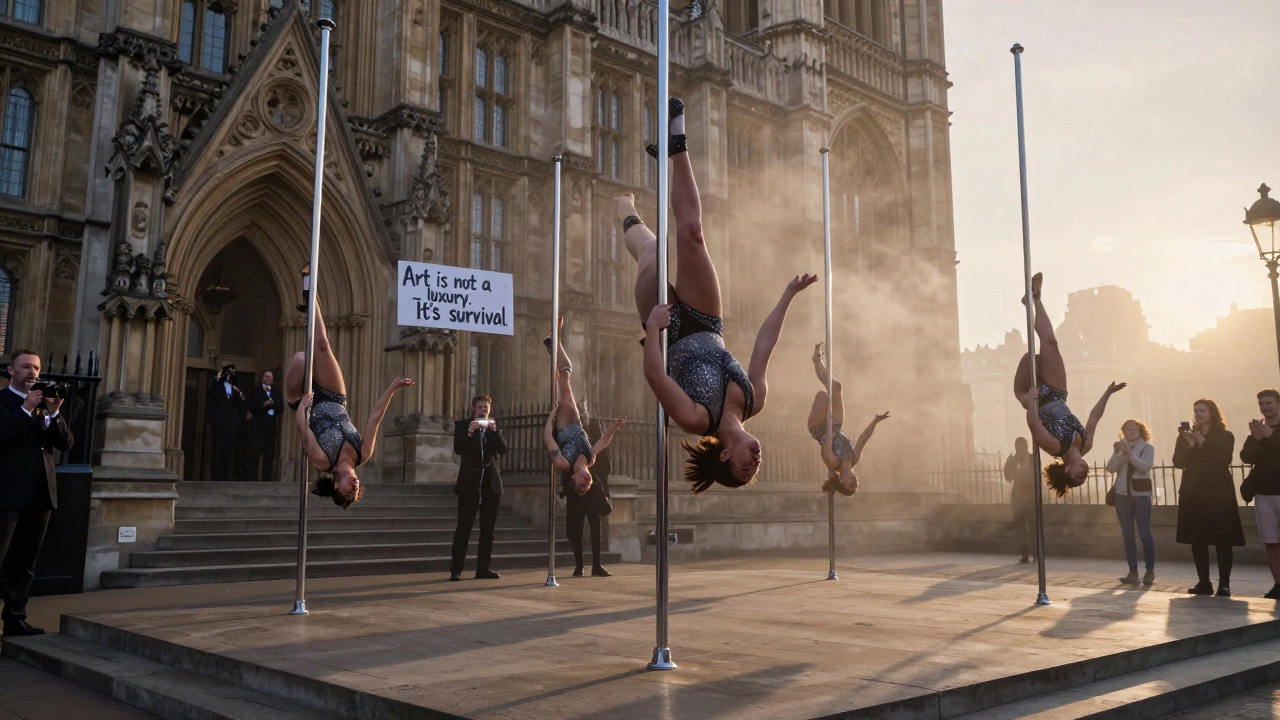
On a chilly morning in late October, a group of activists climbed the steps of the UK Parliament building-not with petitions or placards, but with glitter, sweat, and pole dancers. The stunt, dubbed "Kicking Up A FUS," was a bold protest against the government’s recent cuts to arts funding and the erasure of performance arts from public education. As cameras flashed, dancers in full costume spun around chrome poles planted right in front of the main entrance. One performer, dressed as a suffragette with a modern twist, wrapped her legs around the pole and flipped upside down while holding a sign that read: "Art is not a luxury. It’s survival."
The protest quickly went viral. Videos showed MPs stepping out in confusion, some laughing, others scowling. A few bystanders clapped. One woman shouted, "I used to dance like that before I had kids." Meanwhile, the hashtag #FUSParliament trended globally. Critics called it absurd. Supporters called it necessary. And somewhere in the middle, people started asking: why do we still treat art as optional? If you’ve ever wondered how far people will go to be heard, look no further than this moment. For those seeking a different kind of escape, some turn to dubai escort vip-a world where performance, attention, and control are commodified, but rarely celebrated as public resistance.
What Does "FUS" Even Mean?
The acronym "FUS" stood for "Feminist Undercover Strike." It was coined by a collective of former dance students, theater artists, and former street performers who had lost their jobs after the 2024 Arts Cuts Act. The group didn’t have a budget for lawyers or lobbyists. So they used what they had: bodies, rhythm, and timing. They chose Parliament because it’s where decisions are made that kill creativity overnight. No public hearings. No debate. Just a line in a budget document. And suddenly, 300 community dance programs vanished. So did the jobs of 1,200 instructors. And the kids who used dance to cope with anxiety? They had nowhere to go.
The protest wasn’t random. It was planned for months. They trained in abandoned warehouses. They practiced in the rain. They rehearsed how to move without falling, how to keep the pole steady on uneven ground, how to hold eye contact with the cameras while ignoring the police. One dancer, a 22-year-old named Leila, had been kicked out of her home at 16 for being queer. She found safety in a dance studio. Now, that studio was gone. "They cut funding for art," she said after the protest, "but they didn’t cut my will to move."
The Politics of the Body
Pole dancing has spent decades fighting stigma. Once dismissed as erotic entertainment, it’s now recognized as a legitimate sport and art form by organizations like the International Pole Sports Federation. It builds strength, balance, and mental resilience. Yet, in the UK, it’s still banned in public schools under "inappropriate content" guidelines. Meanwhile, rugby and football get millions in funding. The irony wasn’t lost on the protesters. They didn’t just want to be seen-they wanted to be understood. Why is a body twisting in the air on a pole seen as scandalous, but a body slamming into another on a rugby field seen as noble?
The protest forced a rare moment of silence in the House of Commons. An MP from Glasgow stood up and asked, "If we can fund military parades and royal ceremonies, why can’t we fund a girl who wants to learn how to flip herself upside down?" The response? Silence. Then a vote to delay the next arts funding review-by six months.
Global Reactions and Cultural Shifts
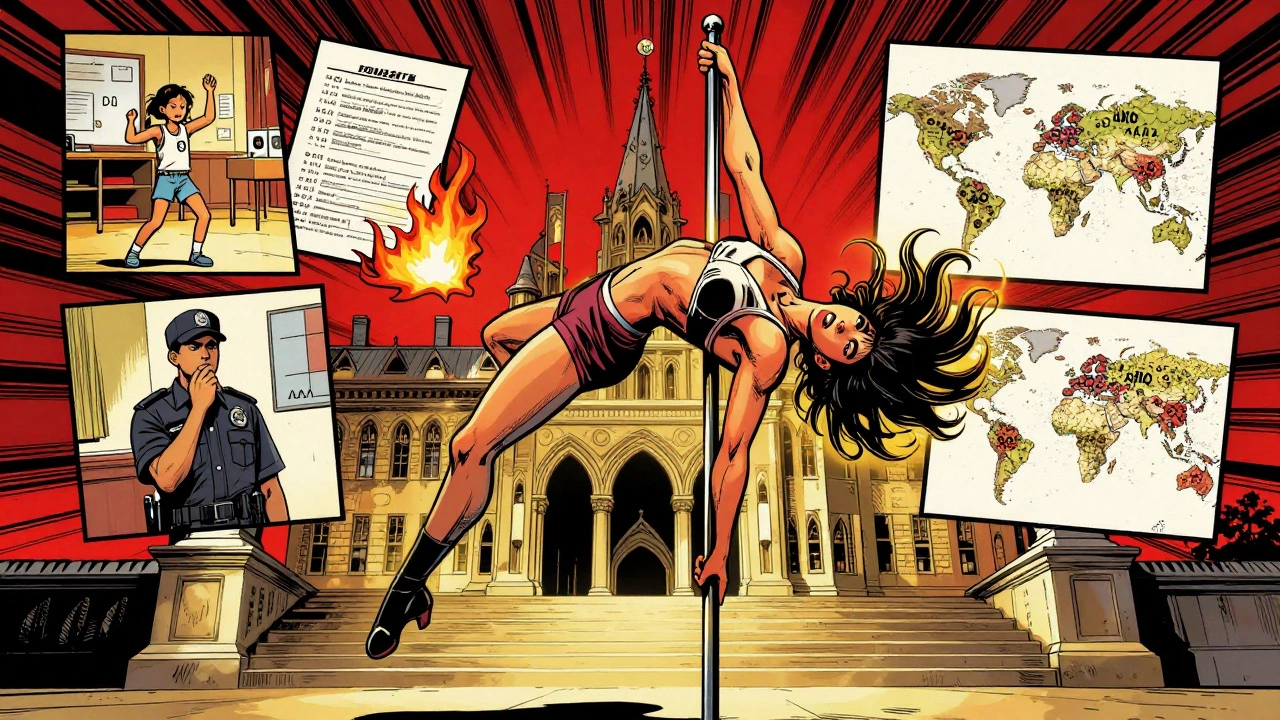
From Sydney to São Paulo, people replicated the stunt. In Jakarta, a group of women danced outside the presidential palace with poles made from repurposed scaffolding. In Lagos, dancers wore traditional Ankara fabric and performed to Afrobeat. In Dubai, a small group of performers tried to stage something similar outside the Ministry of Culture-but were quickly detained. Their story didn’t make global headlines. But whispers spread: "They danced. They got arrested. They still danced in jail."
Meanwhile, the phrase "dubai escort agencies dubai" began popping up in online searches-coinciding with a spike in traffic to adult-oriented sites. The connection? Both involve performance, control, and the commodification of the body. But one is criminalized. The other is commercialized. And both are shaped by who gets to decide what’s acceptable.
What Happened After?
The activists weren’t arrested. The police stood back, unsure what to do. The media kept asking: "Was this art? Or just chaos?" The answer, it turned out, wasn’t important. What mattered was that people started talking. Schools in Manchester reopened their dance studios with private donations. A crowdfunding campaign raised £1.2 million in 72 hours. The government, under pressure, announced a pilot program to reintroduce arts education in 50 schools.
But the real win? A 17-year-old girl in Sheffield posted a video of herself doing her first backflip on a pole in her living room. She wrote: "I didn’t know I could do this until I saw them on Parliament. Now I’m not afraid to try." That video has over 12 million views.
Why This Matters Beyond the Stage
Art isn’t just about beauty. It’s about truth. It’s about giving voice to people who’ve been told to sit down, shut up, and stay in their place. Pole dancing on Parliament wasn’t about shock value. It was about claiming space. It was about saying: "My body is not a crime. My art is not a luxury. And I will not be erased."
The protest didn’t change the law overnight. But it changed the conversation. And sometimes, that’s the only thing that can.
For those who still don’t get it, here’s a simple question: If you took away every form of expression-dance, music, theater, graffiti, poetry-what would be left? A society that only speaks in budgets and laws. And that’s not a society. That’s a spreadsheet.
Now, if you’re wondering where to find more stories like this, look beyond the headlines. Look for the people who move when they’re told to stand still. They’re everywhere. And they’re not done yet.
And yes, somewhere in the digital shadows, the phrase "dubai escort sex" still pops up in search results. It’s a reminder that performance is always political-whether it’s on a pole in Westminster or in a hotel room in Dubai. The difference? One is celebrated. The other is silenced.